Foundation of the SMA (1856)
The Society of African Missions (SMA) — in Latin, Societas Missionum ad Afros — was founded on 8 December 1856, the Feast of the Immaculate Conception, in Lyon, France, by Bishop Melchior de Marion Brésillac.
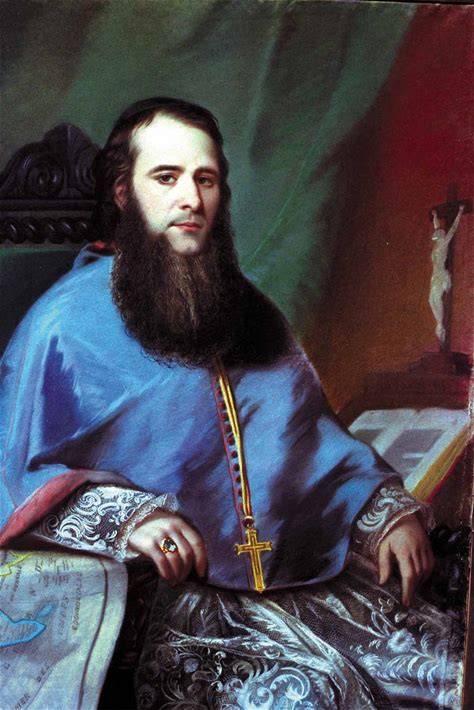
Bishop Melchior de Marion Brésillac
Founder of the SMA • 1813–1859
Born on 2 December 1813 in Castelnaudary, southern France, into a family of social standing that had suffered setbacks during the French Revolution. He was the eldest of five children; his father was an engineer and inspector on the Canal du Midi.
Ordained a diocesan priest on 22 December 1838, the young Brésillac soon felt called to missionary life, despite opposition from both his bishop and his father. In 1841, he left his parish to join the Paris Foreign Mission Society and was appointed to India, arriving in Pondicherry on 24 July 1842.
During twelve years in India (1842–1854), Brésillac served as curate of Salem, rector of the minor seminary of Pondicherry, and was later appointed Vicar Apostolic of Coimbatore. Throughout his time in India, he championed the formation of indigenous clergy and insisted that the Church must entrust leadership to local priests — a conviction that would define the SMA's mission for generations.
Frustrated by resistance to these ideas, Brésillac resigned his position in India and returned to Rome. There, with the encouragement of the Holy See — particularly the Congregation of Propaganda Fide — he was given permission on 29 February 1856 to found a new missionary society dedicated to Africa.
On 8 December 1856, Brésillac led a small group of six companions to the Shrine of Our Lady of Fourvière on the hill above Lyon. There, he consecrated the new society to Our Lady, and together the group dedicated themselves to the evangelization of Africa, particularly of the most abandoned peoples on the continent, and to the formation of indigenous clergy.
The SMA has ever since celebrated the Feast of the Immaculate Conception as its Foundation Day.
The First Mission — and the Founder's Death
The first SMA missionaries — three priests — set sail for Sierra Leone on 4 November 1858. Brésillac himself followed in May 1859, arriving in Freetown as the first Vicar Apostolic of Sierra Leone. Tragically, they arrived in the midst of a raging Yellow Fever epidemic. Within weeks, four of the missionaries — including Brésillac himself — had died. The founder passed away on 25 June 1859, aged just 46.
Father Planque and the Growth of the SMA
Despite this devastating loss, Father Augustine Planque, who had been entrusted with the SMA's affairs in Europe, resolved to continue the mission. As co-founder and first Superior General, Planque guided the society for nearly five decades until his death in 1907.
Under his leadership, the SMA expanded to eight African countries — including Dahomey (Benin), Nigeria, Algeria, Egypt, South Africa, Liberia, Ivory Coast, and the Gold Coast (Ghana). He also founded the Missionary Sisters of Our Lady of Apostles (OLA) in 1876. By the time of Planque's death, the SMA had 296 members — 205 serving in Africa — and more than 130 others had already given their lives on the continent, then grimly known as "the White Man's Grave."
Over time, the SMA grew into an international missionary family. Provinces were gradually established in Ireland (1912), the Netherlands (1923), France (1927), the United States (1941), Great Britain (1968), Italy (1982), and later across Africa, Asia, and elsewhere.
Venerable Bishop Brésillac
On 27 May 2020, Pope Francis declared Bishop Melchior de Marion Brésillac "Venerable," a formal recognition of his heroic virtues and a significant step on the path toward possible canonization.
Early Christian Presence in Ghana
Christianity appeared in the area now known as Ghana long before the arrival of SMA missionaries. Portuguese explorers reached the Gold Coast around 1471 and built the fortress of São Jorge da Mina (Elmina Castle) in 1482 — the oldest European structure in sub-Saharan Africa. Catholic chaplains accompanied traders and established a school at Elmina around 1529.
The first direct evangelization came from Portuguese Capuchins (around 1572), followed by Augustinians and French Capuchins (1633). But when the Dutch seized Elmina Castle in 1637, organized Catholic mission work effectively ended. By the 18th century, Christianity had almost entirely disappeared from the Gold Coast.
The only surviving traces were a small group of Efutu people near Elmina who still identified as Catholic, a worn stump of a statue of St. Anthony of Padua, and a group called the "Sancta Mariafo" (Mary Devotees) who continued to hold processions on certain Fridays, dressed in white robes, carrying candles and a crucifix, and reciting the Pater Noster from memory.
Establishment of the Catholic Mission (1879)
In September 1879, the Catholic Church created the Prefecture Apostolic of the Gold Coast and entrusted this new mission territory to the SMA. This was influenced by Sir James Marshall, a converted Anglican priest and judge in the Gold Coast, who made a direct request to the Office of the Propagation of the Faith (Propaganda Fide) in Rome.
Earlier, in 1878, Fr. Gommenginger of the Holy Ghost Fathers had visited the Gold Coast to identify mission sites, even travelling to Kumasi where the Ashanti King, Nana Mensah Bonsu, warmly received him. However, the Spiritans could not take on the territory due to a chronic shortage of personnel. Rome then entrusted it to the SMA.
Arrival of the First SMA Missionaries (1880)
On 18 May 1880, two French missionaries — Father Auguste Joseph Moreau and Father Eugène Murat — arrived at Elmina aboard a British military ship. They had been dispatched from St. Helena by Father Planque, the SMA Superior General.
On a Friday in Elmina, they encountered a procession of people who called themselves "Mariafo" — the Mary Devotees. A crucifix led the procession; the participants were clad in white robes and held candles. They gathered at a shrine with broken remnants of a statue of St. Anthony. Remarkably, they could recite the Pater Noster from memory.
Local families also practised a ritual resembling baptism: seven days after a child's birth, the infant would be presented with a crucifix and candle and sprinkled three times with water. For Moreau and Murat, these surviving traces of Catholic devotion — maintained for over two centuries without any resident priest — confirmed the time for re-evangelization had come.
Tragically, Father Murat died on 5 August 1880, barely three months after arriving. His burial was the first public Catholic liturgy Father Moreau celebrated on the Gold Coast. Despite extreme hardship and lack of financial assistance, Moreau persevered. In April 1881, he started a school in his mission house, teaching catechism and music, and studying the Fanti language. Moreau died on 21 March 1886, near Axim, aged just 39.
First Baptism
The first baptism took place on Christmas Day, 25 December 1880, in Elmina. Father Boutry baptized a one-year-old boy — the son of the British Acting Administrator C.S. Salmon and a local woman, Esi Rhule. He was named George August Salmon.
Early Growth (1880–1901)
OLA Sisters and Girls' Education
Father Moreau firmly believed that lasting results required the education of girls as well as boys. As he wrote:
"Religion, in order to put down solid roots, must be practised at home and prayers learnt at the mother's knee."
— Fr. Auguste Moreau, SMAOn 26 December 1883, the first two OLA Sisters — Sr. Ignatius (Ireland) and Sr. Potentia (Switzerland) — arrived in Elmina. On 31 March 1884, the first girls' school officially opened with 26 pupils — the first girls' school in connection with the Catholic mission in the Gold Coast.
Expansion of the Mission
First mission station established in Cape Coast.
Church at Elmina officially blessed; Keta becomes an SMA mission centre.
Fr. Hilberer and Fr. Raess celebrate the first Holy Mass in Accra (31 January) in a rented house of Chief Quartey on High Street. The first baptism in Accra — Louis James Buckle — took place 25 May 1893.
Devastating Yellow Fever outbreak kills several missionaries, including the Prefect Apostolic. Accra was left as an outstation, rarely visited by a priest for 30 years (1895–1925). Lay faithful — Joseph Andoh, George Yankah, and others — kept the faith alive.
Cape Coast elevated to Apostolic Vicariate, with Father Maximilien Albert, SMA, as its first Bishop — overseeing 18 priests, 8 sisters, and about 40 teachers.
The Church had spread to over 40 townships, running 17 schools with approximately 1,700 pupils.
Expansion into the Ashanti Kingdom (1882)
On 18 April 1882, Father Moreau undertook a daring journey on foot from the coast to Kumasi, the capital of the powerful Ashanti Kingdom. Through Mr. Brun (a French merchant) and Nana Boakye Tenten (an Ashanti royal at Cape Coast), Moreau secured an audience with the reigning King, Otumfuo Nana Mensah Bonsu II.
The King gave his consent in principle to establish a Catholic mission, but the promised land was never formally granted during Moreau's lifetime.
Bishop Klaus visited Kumasi and found a small Catholic congregation meeting under Nana Akwasi Atta, nephew of Nana Boakye Tenten.
Bishop Hummels signed a deed for land at Zongo Hill in Kumasi for the first Catholic mission station.
Permanent mission established in Kumasi with Fr. Joseph Muller and Fr. Alfred Laurent as first resident missionaries.
St. Peter's Cathedral completed at Zongo Hill. The area became known locally as "Roman Hill."
From Kumasi, the Catholic Church expanded into the Ashanti Region and present-day Ahafo, Bono, Bono East, and Eastern Regions. Today, Ghana has four Archdioceses andsixteen Dioceses, with over 1,350 priests, religious, and seminarians — many tracing their origins to SMA missionary work.
Education and Priest Formation
The SMA placed strong emphasis on education and the formation of indigenous clergy from the very beginning — a commitment rooted in the vision of Bishop de Brésillac, who had championed training local clergy during his years in India.
Catholic Schools and Education
Education was central to the SMA's missionary strategy:
- April 1881 — Fr. Moreau started the first Catholic school in his mission house in Elmina.
- 1884 — OLA Sisters opened the first girls' school.
- 1930 — SMA established the first Catholic Teacher Training College at Amisano, near Elmina.
- 1936 — St. Augustine's College was founded in Cape Coast — Ghana's first Catholic secondary school.
A Notable Connection
Kwame Nkrumah — who would become the first President of the Republic of Ghana — taught briefly at the seminary at Amisano in the early 1930s before his political career.
Seminaries and Formation of Ghanaian Priests
The seminary at Amisano (St. Teresa's Minor Seminary) was formally established. Twelve young men were transferred there on 14 February 1930.
Msgr. George Ansah and Rev. Fr. Francis Menyah ordained in 1935 as the first indigenous diocesan priests of the Catholic Archdiocese of Cape Coast.
Rev. John Kojo Amissah ordained. He would become the first African Archbishop of Cape Coast.
Major seminary relocated to St. Peter's Regional Seminary, Pedu, Cape Coast — one week after Ghana's Independence (6 March 1957).
St. Hubert Minor Seminary established in Kumasi by Bishop Peter Kwasi Sarpong, named after Bishop Hubert Paulissen, SMA — the first Bishop of Kumasi.
Contribution to Ghana's Development
- Education: Catholic schools, teacher training colleges, and secondary schools educated generations and produced national leaders.
- Healthcare: Hospitals, clinics, and health programmes in underserved communities.
- Social Development: Mission stations in rural communities became centres of community development.
- Advocacy & Inclusion: Specialized ministries such as the St. Martin Deaf Ministry in Accra, founded by Fr. René D. Yao, SMA, using Ghanaian Sign Language (GSL).
- Church Infrastructure: Several Catholic dioceses trace their origins directly to SMA missionary work — the four Archdioceses and sixteen Dioceses exist in Ghana today.
Transition to African Leadership
As Ghana's Church matured, the transition from European to African leadership accelerated.
Early Indigenous Clergy
Fr. Anastasius Odaye Dogli ordained as one of the first indigenous priests from the Gold Coast.
George Ansah and Francis Mensah became the first indigenous priests ordained within the SMA seminary system.
John Kojo Amissah ordained. He became the first African Archbishop of Cape Coast (served until 1991).
Bishop Dominic Andoh took canonical possession of the Accra Diocese — the first Ghanaian Bishop of Accra, officially ending missionary-led administration in the capital.
Africans Join the SMA
A pivotal moment came in 1969, when Pope Paul VI addressed the African continent, urging Africa to become its own missionaries. The SMA responded at its 1983 General Assembly with a historic decision to accept African candidates.
First African SMA Priest
On 29 September 1992, Michael Adrie — a Ghanaian from Ave-Afiadenyigba in the Volta Region — was ordained as the first African member of the SMA's African Foundation, at a ceremony in Winneba presided over by Bishop Francis K. Lodonu of Keta-Ho.
Since then, the SMA has opened formation centres across Africa. African candidates now study philosophy in their home countries, attend an International Spiritual Year in Benin or the Philippines, undertake pastoral work, complete theology studies in Kenya, Ivory Coast, or Nigeria, and return home for ordination.
Ghana has thus transformed from a mission-receiving country to a mission-sending country. Ghanaian SMA priests now serve both in Ghana and in missionary assignments across Africa and around the world.
Creation of the SMA Ghana Province (2019)
For many years, SMA members in Ghana operated under the administrative structure known as a Regional circumscription (the Ghana Region). At the SMA General Assembly held in 2019, a major restructuring elevated Ghana to the status of a full Province.
In May 2019, the SMA Ghana Province was officially established, giving it administrative independence within the global SMA structure. The Province was formally inaugurated on 8 December 2019 — the 163rd anniversary of the founding of the SMA — at a colourful celebration at the SMA Provincial House in Oshuiman, Accra.
The Eucharistic celebration was presided over by His Grace Most Rev. Peter Akwesi Sarpong, Archbishop Emeritus of Kumasi and an Honorary Member of the SMA, with about 30 SMA priests, OLA sisters, other religious congregations, Friends of SMA, and parishioners in attendance.
First Provincial Assembly
The first-ever Provincial Assembly took place from 1–7 December 2019 under the theme:
"Gathered under the tent for a renewed spirit"
— Joshua 18:1 • Romans 12:2The Assembly elected:
- Very Rev. Fr. Paul Saa-Dade Ennin, SMA — First Provincial Superior
- Fr. Dennis Senyo Etti, SMA — Vice-Provincial
- Fr. Tranquillin Junior Biro-Moeba, SMA — Councillor
The event also served as the launch of the 140th anniversary of the SMA's presence in Ghana (1879–2019).
Other SMA Provinces created at the same 2019 General Assembly include Benin/Niger, India, Ivory Coast, Nigeria, Poland, Spain, and Togo — reflecting the society's transformation from a predominantly European missionary organization to a truly international and African-led family.
Current Mission & Activities
Today, the SMA Ghana Province remains committed to the founding vision of Bishop de Brésillac — adapted to 21st-century Africa. The Province focuses on:
- Evangelization in underserved areas — Reaching communities where the Catholic faith has not yet been firmly established, including remote and rural areas.
- Formation of new missionary priests — Training and mentoring young Ghanaians called to missionary life through the SMA formation programme.
- Collaboration with lay missionaries — Working alongside the Knights and Ladies of Marshall, Friends of SMA, Christian Mothers, and other lay groups.
- Social development projects — Supporting education, healthcare, and community development initiatives.
- Interreligious dialogue — Engaging with leaders of other religions to promote peace and cooperation.
- Education and healthcare outreach — Continuing the SMA's tradition of building and supporting schools, clinics, and social institutions.
- Ministry to marginalized communities — Including the St. Martin Deaf Ministry in Accra, serving the deaf community through education, training, and pastoral care using Ghanaian Sign Language.
Mission Strategy
"Mission in Africa, with Africa, and from Africa."
"The SMA-Ghana Province today rededicates itself to a new missionary outreach. We aim to become the missionaries' swords of the Church in Ghana and contribute in shaping a new Ghanaian society."
— Fr. Paul Ennin, First Provincial SuperiorSummary Timeline
| Year | Event |
|---|---|
| 1471 | Portuguese missionaries reach the Gold Coast |
| 1482 | São Jorge da Mina (Elmina Castle) built by the Portuguese |
| 1637 | Dutch seize Elmina Castle; organized Catholic mission work ends |
| 1813 | Melchior de Marion Brésillac born in Castelnaudary, France |
| 1856 | SMA founded on 8 December at the Shrine of Our Lady of Fourvière, Lyon |
| 1858 | First SMA missionaries depart for Sierra Leone |
| 1859 | Brésillac and four companions die of Yellow Fever in Freetown |
| 1876 | Missionary Sisters of Our Lady of Apostles (OLA) founded by Fr. Planque |
| 1878 | Fr. Gommenginger (Holy Ghost Fathers) visits Kumasi; received by King Mensah Bonsu |
| 1879 | Gold Coast erected as Prefecture Apostolic, entrusted to the SMA |
| 1880 | Frs. Moreau and Murat arrive in Elmina (18 May); Fr. Murat dies (5 August); First baptism — George August Salmon (25 December) |
| 1881 | Fr. Moreau opens first Catholic school in Elmina |
| 1882 | Fr. Moreau visits Kumasi; meets King Mensah Bonsu II — beginning of Catholic evangelization in Ashanti |
| 1883 | OLA Sisters arrive in Elmina (26 December) |
| 1884 | First girls' school opens in Elmina (31 March) |
| 1886 | Fr. Auguste Moreau dies near Axim, aged 39 (21 March) |
| 1889 | First mission station established in Cape Coast |
| 1890 | Church at Elmina officially blessed; Keta becomes SMA mission centre |
| 1893 | First Holy Mass celebrated in Accra (31 January) |
| 1896 | Cape Coast elevated to Apostolic Vicariate; Maximilien Albert, SMA, becomes first Bishop |
| 1901 | Church spread to over 40 townships; 17 schools with 1,700 pupils |
| 1910 | First permanent resident Catholic mission established in Kumasi |
| 1922 | Fr. Anastasius Odaye Dogli ordained — among the first indigenous Gold Coast priests |
| 1929 | St. Peter's Cathedral, Kumasi, completed |
| 1930 | Seminary established at Amisano (St. Teresa's Minor Seminary) |
| 1935 | Msgr. George Ansah and Rev. Fr. Francis Menyah ordained in 1935 as the first indigenous diocesan priests of the Catholic Archdiocese of Cape Coast. |
| 1936 | St. Augustine's College, Cape Coast, founded — first Catholic secondary school |
| 1957 | Major seminary relocated to St. Peter's Regional Seminary, Pedu, Cape Coast |
| 1970 | St. Hubert Minor Seminary established in Kumasi by Bishop Peter K. Sarpong |
| 1971 | Bishop Dominic Andoh becomes first Ghanaian Bishop of Accra |
| 1980 | Pope John Paul II visits Ghana (8 May) to celebrate the centenary of the SMA's arrival |
| 1983 | SMA General Assembly decides to accept African candidates |
| 1992 | Michael Adrie (Ghana) ordained as first African SMA priest (29 September, Winneba) |
| 2019 | SMA Ghana Province officially established (May); inaugurated 8 December; Fr. Paul Saa-Dade Ennin, SMA elected first Provincial Superior |
| 2020 | Pope Francis declares Bishop Brésillac "Venerable" (27 May) |
Province Leadership
In September/October 2025, the SMA Ghana Province held its Second Provincial Assembly in Accra on the theme: "Missionaries of Hope: Called to Proclaim the Gospel to the Most Abandoned in Africa, with Africa and from Africa."
The Assembly elected new leadership to guide the Province for the next six years:
Rev. Fr. James Owusu-Yeboah, SMA
Provincial Superior
Rev. Fr. Jean de Dieu Ahorloo, SMA
Vice-Provincial Superior
Rev. Fr. David Agbevanoo, SMA
1st Provincial Councillor
Rev. Fr. Kouamé René Dan Yao, SMA
2nd Provincial Councillor
Rev. Fr. Abraham Ndomwin Guolitiri, SMA
Provincial Secretary
"Missionaries of Hope: Called to Proclaim the Gospel to the Most Abandoned in Africa, with Africa and from Africa."
— Theme of the Second Provincial Assembly, 2025This new leadership signals continued emphasis on missionary outreach, deaf ministry, and formation.
Previous Provincial Council Historical record • 2019–2025
The First Provincial Assembly, held from 1–7 December 2019, established the first recorded leadership of the SMA Ghana Province.
Very Rev. Fr. Paul Saa-Dade Ennin, SMA
First Provincial Superior
Fr. Dennis Senyo Etti, SMA
Vice-Provincial
Fr. Tranquillin Junior Biro-Moeba, SMA
Provincial Councillor
Inspired by Our Story?
Whether you feel called to mission, want to support our work, or simply want to learn more — we welcome you.